ERW Steel Pipes: Types, Specifications and Industrial Applications
By Shree Pipes Team | 20 November 2026 | 4 min read
Introduction
Steel pipes are the backbone of modern infrastructure. From water supply networks to oil and gas transmission, they carry fluids, support structures and withstand demanding conditions every day. Among the many options available, ERW steel pipes in Kanpur are one of the most widely used because they offer a strong balance of quality, cost efficiency and versatility.
In this guide, we explain what ERW steel pipes are, the types available, their key specifications and where they are used. If you are searching for a reliable steel company, this overview will help you make an informed decision.
What Are ERW Steel Pipes?
ERW stands for Electric Resistance Welded. These steel pipes are made by cold-forming a flat steel strip or coil into a cylindrical shape. The edges are then heated by electric resistance and pressed together to form a longitudinal seam, without any filler material.
This process creates a uniform, smooth and dimensionally accurate pipe. Modern ERW production also includes weld seam heat treatment and ultrasonic testing, which improve the strength and reliability of the weld.
Types of ERW Steel Pipes
ERW steel pipes are available in several types to suit different needs.
1. ERW Black Pipes
These are uncoated pipes commonly used for structural purposes, general engineering and low-pressure fluid transport.
2. ERW Galvanized Pipes
Coated with a layer of zinc, these pipes resist corrosion and rust. They are ideal for water supply, plumbing, fencing and outdoor installations.
3. ERW Round Pipes
The most common shape, used in pipelines, scaffolding, furniture and general construction.
4. ERW Square and Rectangular Pipes
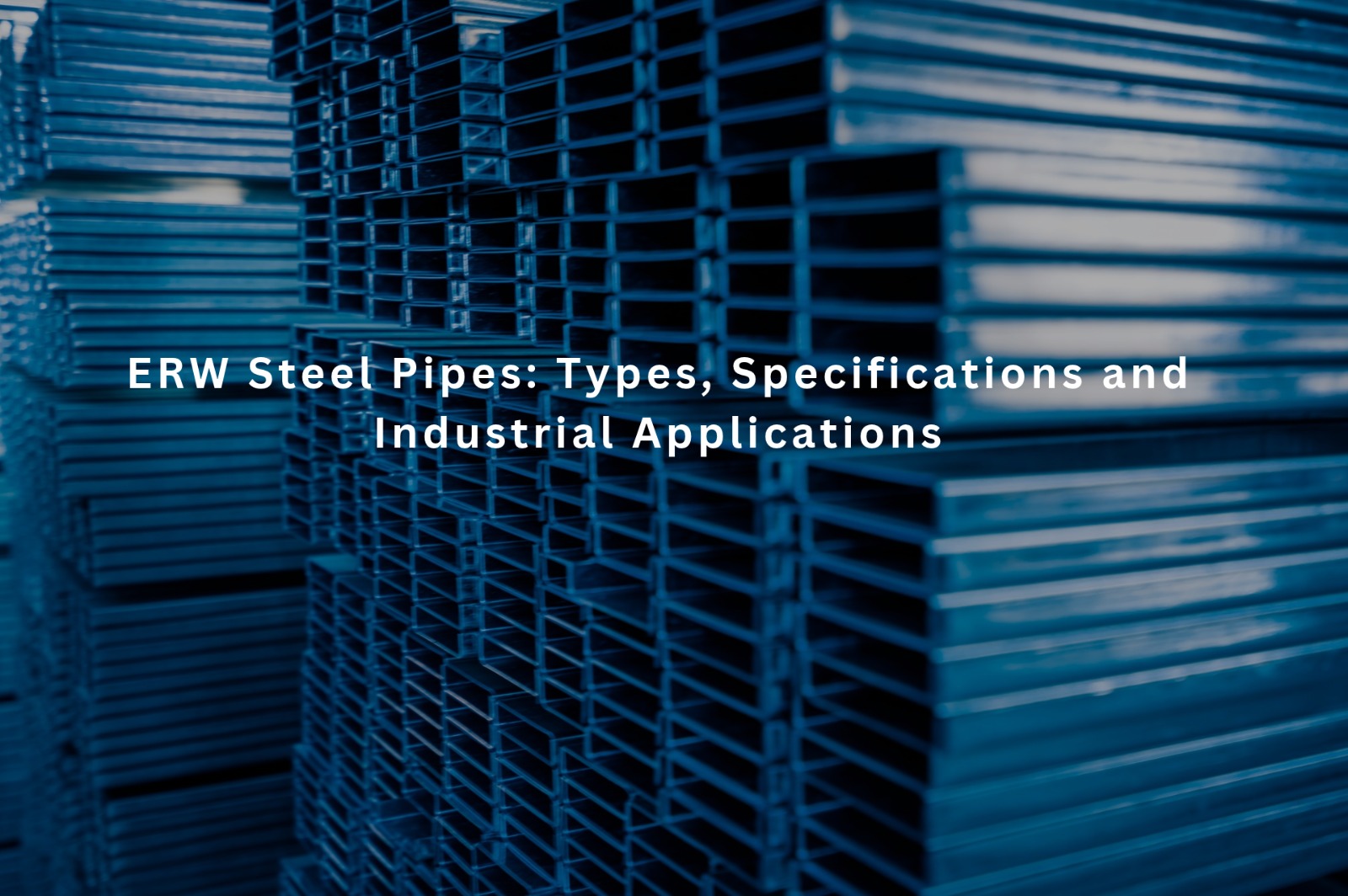
Also called hollow sections, these are popular in structural frameworks, building construction, machinery and architectural designs.
5. ERW Line Pipes
Manufactured to meet strict standards, these pipes are used for transporting oil, gas and water over long distances.
Key Specifications of ERW Steel Pipes
Choosing the right pipe depends on understanding its specifications. Typical parameters include:
- Outer Diameter Generally ranging from 15 mm to 600 mm or more, depending on the manufacturer.
- Wall Thickness Usually from 1.6 mm to 12 mm, selected according to pressure and load requirements.
- Length Commonly 6 meters to 12 meters, with custom lengths available.
- Material Grades Carbon steel grades such as Grade A, Grade B, and higher strength grades like X42 to X70 for line pipes.
- Standards IS 1239, IS 3589, IS 1161, API 5L, ASTM A53 and EN 10219 are among the standards followed.
- Surface Finish Black, galvanized, oiled or painted, based on end use.
- End Types Plain end, beveled end or threaded end.
Always verify that the pipes comply with the relevant standard and are supported by test certificates.
Advantages of ERW Steel Pipes
There are many reasons why industries prefer ERW pipes:
- Cost effective Production is efficient, making them more economical than seamless pipes in many applications.
- Uniform wall thickness Cold-forming from coil ensures consistent dimensions.
- Smooth finish Both inner and outer surfaces are clean and even.
- High strength Modern welding and testing methods deliver dependable performance.
- Wide availability A broad range of sizes and grades can be produced in volume.
Industrial Applications of ERW Steel Pipes
ERW steel pipes serve a wide range of sectors:
- Construction and infrastructure Scaffolding, columns, trusses, bridges and building frameworks.
- Oil and gas Transmission of crude oil, natural gas and petroleum products.
- Water supply and irrigation Municipal water lines, agricultural irrigation and drainage systems.
- Automobile and engineering Chassis components, machinery parts and conveyor systems.
- Fire protection systems Sprinkler and fire hydrant networks.
- Furniture and fabrication Frames, railings, gates and decorative structures.
How to Choose the Right ERW Pipe Manufacturer
Quality depends heavily on the manufacturer. When evaluating a steel company, consider the following:
- Use of high-grade raw material and modern production technology.
- Compliance with national and international standards.
- In-house testing facilities, including hydrostatic and ultrasonic tests.
- Ability to offer custom sizes and timely delivery.
- Strong after-sales support and a proven track record.
Why Choose Shreepipes?
Shreepipes is a dependable name in the steel industry, committed to delivering high-quality ERW steel pipes for diverse applications. As a customer-focused steel company, Shreepipes combines advanced manufacturing processes with strict quality checks to ensure every pipe meets the required specifications.
From structural projects to fluid transport systems, Shreepipes offers a comprehensive range of steel pipes in multiple sizes, grades and finishes. Our focus on consistency, durability and on-time delivery makes us a preferred partner for contractors, distributors and industrial buyers.
Conclusion
ERW steel pipes continue to be a preferred solution across industries thanks to their strength, affordability and adaptability. Understanding the types, specifications and applications helps you select the right product for your project and avoid costly errors.
For premium quality ERW steel pipes backed by expertise and reliability, choose Shreepipes. Contact us today to discuss your requirements and get a competitive quote.
Need a quote?
Share your requirement with the Shree Pipes team and get expert guidance with competitive pricing.